
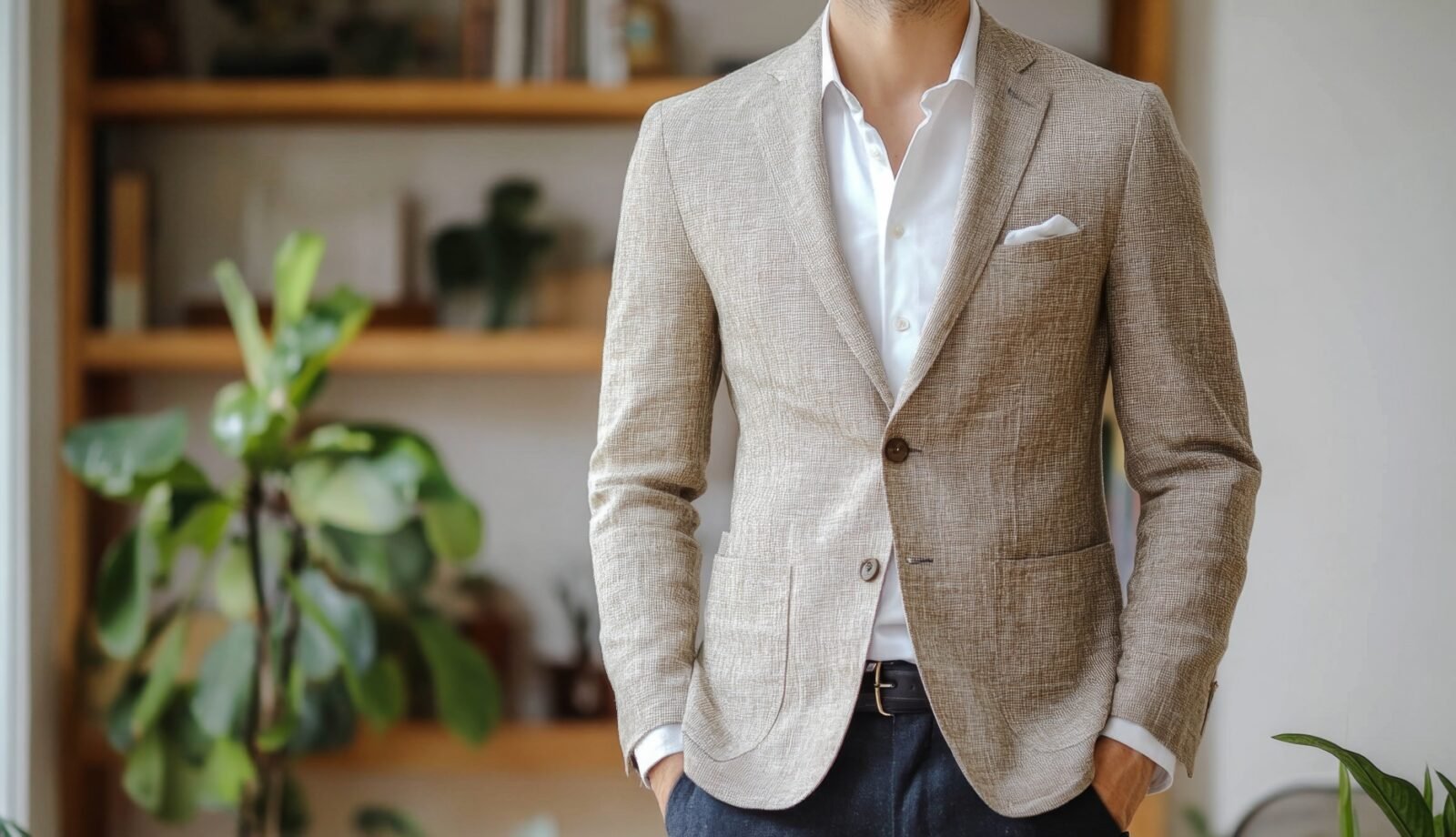
Dressing well in Dubai is not just about appearance—it’s about making the right material choices for a climate that demands performance. High temperatures, humidity, and constant transitions between outdoor heat and air-conditioned interiors make fabric selection one of the most important decisions in tailoring.
The right fabric doesn’t just keep you comfortable. It ensures the garment holds its shape, moves well, and remains wearable throughout the day.

What the Dubai Climate Requires from a Fabric
A fabric suited for Dubai must do three things consistently:
- Allow airflow to reduce heat retention
- Manage moisture without feeling heavy
- Maintain structure despite humidity and movement
Many fabrics may feel light initially, but only a few perform well across all three.
The Most Suitable Fabrics for Dubai
1. Tropical Wool (Lightweight Wool)
Often overlooked, lightweight wool is one of the most effective fabrics for warm climates.
- Naturally breathable and moisture-wicking
- Holds structure better than most summer fabrics
- Resists wrinkles more effectively than linen
High-twist versions (like fresco-style weaves) are especially suited for Dubai, offering durability with airflow.
2. Linen
Linen is synonymous with warm-weather dressing—and for good reason.
- Exceptional breathability
- Extremely lightweight
- Ideal for outdoor settings and social occasions
However, linen creases easily, which makes it better suited for relaxed environments rather than formal business settings.
3. Cotton
Cotton sits between wool and linen in both structure and feel.
- Soft and breathable
- Suitable for daily wear
- More structured than linen, less rigid than wool
It works well for business-casual wardrobes and transitional dressing.
4. Wool Blends
Blended fabrics combine the strengths of different fibres.
- Better crease resistance than pure linen
- Improved durability
- Balanced comfort and structure
These are often preferred by clients who need a suit that performs across both professional and social settings.
Fabric Weight Matters More Than You Think
In Dubai, fabric weight plays a critical role in comfort.
- 180–240 GSM: Ideal for most of the year
- 240–260 GSM: Suitable for indoor-heavy environments
- Above 280 GSM: Generally too heavy for daily wear in the region
However, weight alone isn’t enough—the weave and finish also determine how breathable a fabric feels.
Construction Enhances Fabric Performance
Even the best fabric can feel heavy if the suit is constructed incorrectly.
- Half-lined or unlined jackets improve airflow
- Lightweight canvassing allows the garment to breathe
- Reduced padding prevents heat buildup
At House of Tailors in Dubai, fabric selection is always paired with construction choices to ensure the final garment performs as expected in local conditions.
Choosing Based on How You Live, Not Just the Weather
Dubai’s lifestyle is unique. Most professionals move between:
- Outdoor heat
- Air-conditioned offices
- Meetings, events, and travel
This means your wardrobe needs versatility.
- Lightweight wool works best for business environments
- Linen and cotton are ideal for social and casual settings
- Blends offer flexibility across multiple occasions
Clients working with House of Tailors in Dubai often build a rotation that reflects this—rather than relying on a single type of fabric.
Common Mistakes to Avoid
- Choosing fabric based only on feel, not performance
- Going too light and losing structure
- Ignoring how often the suit will be worn
- Overlooking construction and lining choices
A fabric may feel comfortable in the showroom but behave very differently after a full day of wear.
Final Thought
The best fabric for Dubai is not defined by tradition—it’s defined by performance.
A well-chosen cloth should keep you comfortable, maintain its shape, and adapt to your day without requiring constant adjustment.
And when selected correctly, it becomes the difference between a suit you own—and a suit you actually wear.