

Your wedding suit is more than another item on your wedding checklist. It is the outfit you’ll wear during one of the most memorable days of your life, and it will appear in every photograph, every video, and every family album for years to come. While venues, flowers, and décor often receive months of planning, many grooms leave their suit until the last minute, limiting their options and adding unnecessary stress.
Choosing a wedding suit isn’t simply about selecting a colour or deciding between a suit and a tuxedo. The venue, season, dress code, fabric, construction, and fit all influence how you’ll look and feel throughout the day. A well-tailored wedding suit should be comfortable from the ceremony to the final dance while reflecting your personality and complementing the overall style of the wedding.
At House of Tailors in Dubai, every wedding consultation begins with understanding the groom, the wedding, and the vision for the day. Whether you’re planning a grand ballroom celebration, an intimate garden ceremony, a beach wedding, or a destination event, the right tailoring ensures you feel confident every step of the way.
This guide covers everything you need to know before choosing your wedding suit.
When Should You Start Planning Your Wedding Suit?
One of the biggest mistakes grooms make is underestimating how long tailoring takes.
Unlike buying a ready-made suit, bespoke and made-to-measure tailoring involves consultations, fabric selection, measurements, fittings, and final adjustments. Every stage contributes to the finished result, and rushing the process often means compromising on details.
Ideally, you should begin planning your wedding suit three to six months before the wedding.
Starting early gives you enough time to:
- explore different fabrics and styles
- coordinate colours with the wedding theme
- schedule fittings comfortably
- make alterations if required
- organise suits for the groomsmen
If you’re planning a destination wedding or getting married during the busy wedding season, allowing additional time is always advisable.
Planning also makes the experience more enjoyable. Rather than worrying about deadlines, you can focus on creating a suit that feels exactly right for the occasion.
How Long Does Bespoke Tailoring Take?
Every tailor works slightly differently, but bespoke tailoring is never an overnight process.
A bespoke suit involves creating a garment around the individual rather than adapting a standard size. This takes time because the suit evolves through several stages before completion.
At House of Tailors in Dubai, the typical process includes:
- an initial consultation
- fabric selection
- detailed measurements
- one or more fittings
- final refinements before collection
Made-to-measure suits generally have a shorter turnaround, while fully bespoke garments require additional time because every detail is developed specifically for the client.
If your wedding date is approaching quickly, express options may be available depending on fabric availability and production schedules. However, wherever possible, allowing sufficient time ensures the best possible result.
Planning Suits for the Groomsmen
The groom may be the centre of attention, but the wedding party also plays an important role in the overall look of the day.
Well-coordinated groomsmen create consistency in photographs and help frame the groom without overshadowing him.
That doesn’t mean everyone needs to wear the same outfit.
Many weddings now create distinction by giving the groom:
- a different waistcoat
- a unique tie or bow tie
- contrasting lapels
- personalised details
- a slightly different fabric or shade
while the groomsmen wear suits that complement the overall colour palette.
This approach keeps the wedding party cohesive while ensuring the groom naturally stands apart.
At House of Tailors in Dubai, group consultations allow the entire wedding party to be measured together while ensuring each individual receives a proper fit.
When Should the Groomsmen Get Measured?
Once the groom’s suit has been finalised, it’s time to organise the rest of the wedding party.
Ideally, the groomsmen should be measured around two to three months before the wedding. This provides enough time to complete production, schedule fittings, and make any final adjustments if necessary.
Planning measurements together also helps maintain consistency across the group.
During the consultation, factors such as:
- height differences
- body shape
- personal comfort
- preferred trouser length
- sleeve proportions
are considered individually rather than relying on standard sizing.
Even when every groomsman wears the same design, proper tailoring ensures each person looks comfortable and well presented.
How to Choose the Right Wedding Suit
The perfect wedding suit isn’t determined by current trends alone.
It should reflect the style of the wedding, the venue, the season, and your own personality.
Before choosing fabrics or colours, consider a few important questions:
- Is the ceremony indoors or outdoors?
- Will the wedding take place during the day or evening?
- Is there a formal dress code?
- Is it a beach, garden, ballroom, hotel, or destination wedding?
These factors influence everything from fabric selection to colour and construction.
A lightweight linen blend may work beautifully for a beach ceremony, while a structured wool suit is often better suited to a luxury hotel reception.
Rather than choosing a suit simply because it’s fashionable, choose one that feels appropriate for the setting and allows you to move comfortably throughout the day.
The best wedding suits rarely compete with the occasion—they complement it.
2-Piece vs 3-Piece Suit
One of the first styling decisions you’ll make is whether to wear a two-piece or three-piece suit.
Both options work well, but they create different impressions.
A two-piece suit offers a cleaner, slightly more relaxed appearance. It’s an excellent choice for destination weddings, garden ceremonies, and celebrations with a less formal atmosphere.
A three-piece suit adds a waistcoat, creating a more complete and traditional look. It also offers practical advantages.
During the reception, many grooms remove their jacket once the celebrations begin. A waistcoat allows you to stay looking polished without feeling overdressed or uncomfortable.
This is particularly useful for summer weddings, where temperatures often rise as the day progresses.
Many grooms also appreciate the versatility of a three-piece suit after the wedding. The waistcoat can later be worn separately with tailored trousers or incorporated into other formal outfits.
Ultimately, the decision comes down to the level of formality you want to achieve and how you expect to wear the suit after the wedding.
Suit vs Tuxedo
Although the two are often confused, a suit and a tuxedo serve different purposes.
A wedding suit is generally made using the same fabric throughout the jacket and trousers. It offers greater versatility and can easily be worn again for business events, formal dinners, or future celebrations.
A tuxedo is designed specifically for formal occasions. Traditional tuxedos feature satin detailing on elements such as the lapels, buttons, and trouser stripe, giving them a more ceremonial appearance.
If your wedding invitation specifies black tie, a tuxedo is usually the appropriate choice.
For many other weddings, particularly daytime ceremonies or destination celebrations, a beautifully tailored suit offers greater flexibility while still feeling special.
Modern grooms also have more options than ever before. Alongside classic black tuxedos, colours such as midnight blue, burgundy, ivory, and deep green have become increasingly popular for evening weddings.
During your consultation at House of Tailors in Dubai, your tailor can help you decide whether a bespoke suit or tuxedo better suits your venue, dress code, and long-term wardrobe goals.
The best choice isn’t simply the more formal one—it’s the one that fits the occasion and makes you feel your best on one of the most important days of your life.
Best Wedding Suit Colours
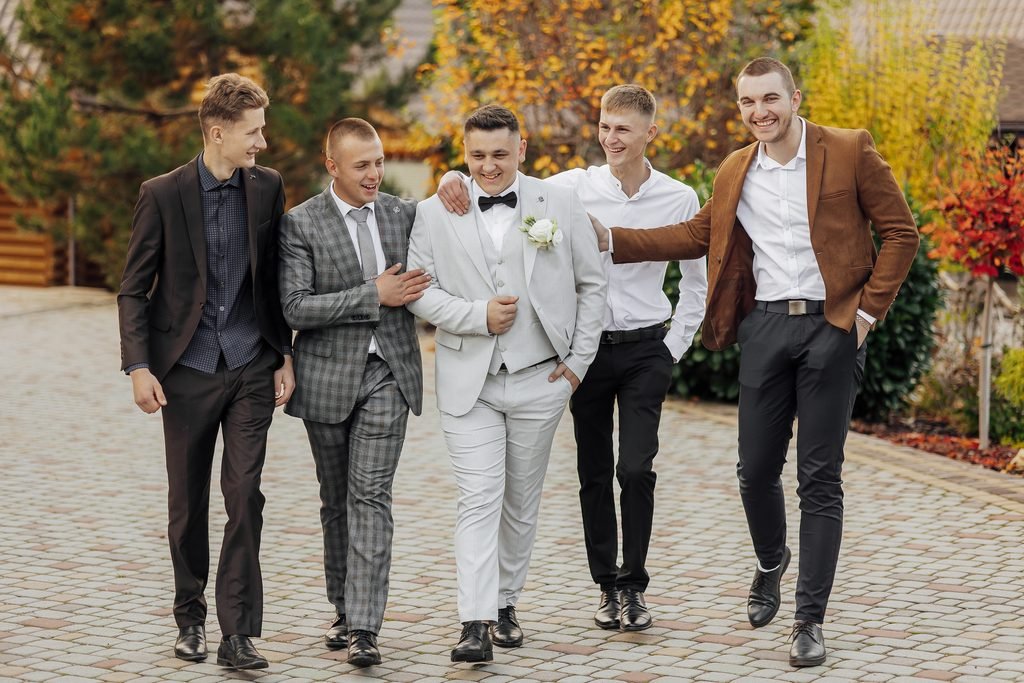
Choosing the right colour is one of the biggest decisions you’ll make when designing your wedding suit. While black remains a classic option, modern weddings offer far more flexibility, allowing grooms to choose colours that complement the season, venue, and overall wedding style.
For formal evening weddings, navy, midnight blue, and classic black continue to be popular choices. These colours create a timeless look and work particularly well in hotel ballrooms, banquet halls, and black-tie celebrations.
For daytime or summer weddings, lighter shades often feel more appropriate. Light grey, sand, beige, soft brown, and even ivory have become increasingly popular, especially for outdoor ceremonies and destination weddings. These colours reflect natural light beautifully and create a softer appearance in photographs.
Rather than choosing a colour because it’s fashionable, consider how it complements the venue, your partner’s outfit, and the wedding palette. A bespoke consultation allows you to compare fabrics and shades in person before making a final decision.
Choosing the Right Wedding Fabric
A wedding suit should look exceptional, but it also needs to remain comfortable throughout a long day of celebrations.
Fabric plays a major role in how the suit performs.
For weddings in Dubai and across the GCC, lightweight fabrics are often the preferred choice. Tropical wool remains one of the most versatile options because it combines breathability with structure, making it suitable for both indoor and outdoor events. Wool-silk blends add a subtle natural sheen that photographs beautifully, while linen blends are ideal for beach weddings and destination ceremonies where a more relaxed appearance suits the setting.
The season should always influence fabric selection. A heavier wool cloth that performs well during winter may feel unnecessarily warm for a July wedding, while extremely lightweight fabrics may not provide the structure required for formal evening occasions.
At House of Tailors in Dubai, fabric recommendations are based on the wedding venue, expected weather, dress code, and how the suit will be used after the wedding.
Peak, Shawl or Notch Lapel?
Lapel style has a surprisingly large influence on the overall appearance of a wedding suit.
Although many people overlook this detail, the lapel helps define how formal the jacket feels.
A peak lapel is one of the most popular choices for wedding suits. Its upward-pointing shape creates a stronger silhouette and naturally broadens the shoulders, making it suitable for both classic suits and tuxedos.
A shawl lapel features a smooth, rounded edge with no points or notches. It is traditionally associated with tuxedos and black-tie events, creating an elegant and formal appearance.
A notch lapel is the most common lapel found on business suits. While it remains a timeless choice for everyday tailoring, many grooms prefer peak lapels for weddings because they provide a slightly more distinguished look without feeling overly dramatic.
The best lapel is ultimately the one that suits both the style of the wedding and the proportions of the wearer.
Single-Breasted vs Double-Breasted
Another important design choice is deciding between a single-breasted and double-breasted jacket.
A single-breasted suit remains the most versatile option. It flatters most body types, feels comfortable throughout the day, and can easily be worn again after the wedding for business or formal occasions.
A double-breasted suit creates a bolder silhouette with overlapping front panels and a stronger visual presence. It has become increasingly popular among grooms looking for something distinctive while maintaining a classic appearance.
However, double-breasted jackets are designed to remain buttoned when worn and generally suit certain body proportions better than others.
During a bespoke consultation, your tailor can recommend which style best complements your build, wedding theme, and personal style.
How Your Wedding Suit Should Fit
No design detail has a greater impact than the fit.
Even the finest fabric cannot compensate for a jacket that pulls across the chest or trousers that bunch awkwardly around the ankles.
A well-fitted wedding suit should feel comfortable from the moment you put it on until the final dance. The shoulders should sit naturally without overhanging, the jacket should close comfortably without strain, and the sleeves should allow a small portion of the shirt cuff to remain visible.
The trousers should break neatly over the shoes while allowing unrestricted movement throughout the day.
Because weddings involve standing, sitting, walking, hugging guests, and dancing, comfort becomes just as important as appearance.
At House of Tailors in Dubai, fittings focus not only on how the suit looks while standing, but also how it performs during natural movement.
Choosing the Right Wedding Shirt
The shirt provides the foundation for the entire outfit.
A crisp white shirt remains the most versatile and popular choice because it pairs effortlessly with almost every wedding suit colour. It also creates a clean backdrop for ties, bow ties, and accessories.
Collar style should complement the neckwear.
A spread collar works well with both ties and bow ties, making it the most versatile option. For formal black-tie weddings, a wing collar is traditionally worn with a self-tie bow tie and tuxedo.
Cuffs also influence the overall look.
Barrel cuffs offer a classic finish suitable for most weddings, while French cuffs provide a more formal appearance and allow the addition of cufflinks.
Small details like collar shape and cuff style may seem minor individually, but together they contribute to a polished wedding outfit.
Wedding Accessories
Accessories should complete the outfit rather than dominate it.
The choice between a tie and a bow tie usually depends on the level of formality. A tuxedo is traditionally paired with a bow tie, while a tailored suit works beautifully with either option depending on the wedding style.
A pocket square introduces texture and colour without overwhelming the look. Rather than matching it exactly to the tie, choose colours that complement the overall outfit.
Cufflinks add a subtle personal touch and are often selected to coordinate with the watch, wedding band, or other metal accessories.
When it comes to trousers, many bespoke clients now choose side adjusters instead of belt loops. They provide a cleaner appearance and eliminate the need for a belt, creating a more elegant silhouette.
For black-tie weddings, a cummerbund or waistcoat may also be appropriate, depending on the overall styling of the tuxedo.
The most successful wedding accessories work together naturally. They enhance the suit without becoming the centre of attention, allowing the groom to remain the focus.
Wedding Shoes
The right pair of shoes completes the wedding outfit. Even the best-tailored suit can lose its impact if it’s paired with footwear that doesn’t match the level of formality or the overall style of the wedding.
For traditional weddings, black Oxford shoes remain the safest and most timeless option. Their clean lines and formal appearance pair beautifully with both classic suits and tuxedos. For navy, grey, or brown wedding suits, dark brown leather shoes are equally elegant and often add a little more warmth to the overall look.
If you’re wearing a tuxedo, patent leather shoes are a classic choice for black-tie occasions. For destination weddings or more relaxed celebrations, high-quality loafers or suede dress shoes can work exceptionally well, provided they complement the dress code.
Whatever style you choose, your shoes should be polished, comfortable, and properly broken in before the wedding day. A wedding often involves hours of standing, walking, and dancing, so comfort should never be overlooked.
As a simple rule, your belt—if you’re wearing one—should match the colour of your shoes to create a cohesive finish.
Can You Wear Your Wedding Suit Again?
One question many grooms ask during their consultation is whether they’ll be able to wear their wedding suit after the big day.
The answer depends largely on how the suit is designed.
Classic colours such as navy, charcoal, mid-grey, and even certain shades of brown transition effortlessly into business meetings, formal dinners, and other celebrations. A well-tailored wedding suit can become one of the most versatile garments in your wardrobe.
Tuxedos are naturally more occasion-specific because of their satin detailing and formal styling. While they remain an excellent investment for black-tie events, they aren’t as versatile as a traditional suit.
Many clients at House of Tailors in Dubai choose to design their wedding suit with future wear in mind. A classic three-piece navy suit, for example, can later be worn as:
- a complete business suit
- a blazer with separate trousers
- tailored trousers paired with knitwear or shirts
- formal attire for future weddings and events
This approach allows your wedding suit to become part of your long-term wardrobe rather than remaining in storage after one special day.
Why Choose House of Tailors for Your Wedding Suit?
Every wedding is different, and every groom has a different vision.
Some want a timeless navy suit they’ll continue wearing for years. Others are looking for a statement tuxedo that reflects the significance of the occasion. The role of a bespoke tailor is to bring that vision to life while ensuring the garment performs beautifully throughout the day.
At House of Tailors in Dubai, the wedding tailoring process begins with understanding your celebration, personal style, and practical requirements. During your consultation, our team helps you choose the right fabric, colour, construction, and design details based on your venue, season, and wedding theme.
Our wedding tailoring services include:
- Bespoke and made-to-measure wedding suits
- Groom and groomsmen consultations
- Wedding tuxedos
- Custom shirts and waistcoats
- Personal styling guidance
- Home and office consultations across Dubai and the UAE
- Multiple fittings for the perfect finish
Whether you’re planning a local celebration or a destination wedding, our goal is to create a suit that feels as memorable as the occasion itself.
Final Thoughts
Your wedding suit is far more than a formal outfit. It’s something you’ll remember every time you look back at your wedding photographs, celebrate anniversaries, or attend future occasions wearing the same garment.
Planning early, choosing the right fabric, understanding the dress code, and investing in proper tailoring all contribute to a suit that not only looks exceptional but also feels comfortable throughout the day.
While details such as lapels, accessories, shoes, and fabrics all play an important role, the most memorable wedding suits have one thing in common—they fit perfectly and reflect the person wearing them.
Take your time, enjoy the process, and work with an experienced tailor who understands your vision. When every element comes together, your wedding suit becomes more than clothing. It becomes part of one of life’s most important milestones.