

Your wedding suit is one of the most important outfits you’ll ever wear. It will be photographed from every angle, remembered for years to come, and should reflect both the significance of the occasion and your personal style.
Modern grooms have more choices than ever before. From timeless morning suits and classic tuxedos to contemporary three-piece suits and softer tailoring, today’s wedding attire offers far greater flexibility than simply choosing between black or navy.
The right wedding suit isn’t determined by fashion alone. It should complement the venue, dress code, season, and overall wedding aesthetic while ensuring you remain comfortable from the ceremony to the final celebration.
At House of Tailors in Dubai, every wedding consultation begins by understanding the wedding itself before recommending fabrics, silhouettes, and styling details. Whether you’re planning a traditional ballroom reception, an intimate garden ceremony, or a destination wedding, selecting the right style is the first step towards creating a memorable look.
This guide introduces the wedding suit styles every groom should know before making that decision. It has been developed with inspiration from established wedding tailoring principles while adapting the advice for modern weddings and bespoke tailoring in the UAE.
Why Choosing the Right Wedding Suit Matters
Your wedding suit should do more than simply meet the dress code.
It should help you feel comfortable, confident, and appropriately dressed for one of the biggest days of your life.
Unlike a business suit, a wedding suit carries emotional significance. It should complement your partner’s outfit, work with the wedding venue, and create a timeless appearance in photographs.
It also becomes part of the overall visual story of the day. The groom, groomsmen, and bridal party should look coordinated without appearing identical.
Choosing the right style from the beginning makes every later decision—from fabrics to accessories—much easier.
Understanding Wedding Dress Codes
Before looking at different suit styles, it’s important to understand the dress code.
The invitation often provides the first clue about what you should wear.
Some of the most common wedding dress codes include:
Black Tie
A black-tie wedding traditionally calls for a tuxedo with satin lapels, a formal white shirt, black bow tie, and polished dress shoes.
Formal
A formal wedding generally allows either a tuxedo or a beautifully tailored dark suit, depending on the venue and time of day.
Cocktail or Lounge Suit
This is one of the most common dress codes today.
A tailored two-piece or three-piece suit in colours such as navy, charcoal, or mid-grey works perfectly.
Destination or Garden Wedding
These weddings usually allow lighter fabrics and softer colours, making linen blends, lightweight wool, and relaxed tailoring particularly suitable.
When in doubt, it’s always better to be slightly overdressed than underdressed.
Classic Wedding Suit Styles
Classic tailoring has remained popular for decades because it continues to suit almost every wedding setting.
These styles evolve slowly, making them an excellent investment for grooms who appreciate timeless dressing.
The Morning Suit
The morning suit remains one of the most traditional forms of men’s wedding attire.
Although less common than it once was, it continues to be worn for highly formal daytime weddings, royal ceremonies, and traditional celebrations.
A classic morning suit consists of:
- a tailcoat
- striped trousers
- a contrasting waistcoat
- white dress shirt
- tie or cravat
- formal black shoes
This style creates a distinguished look and suits historic venues, churches, and grand daytime weddings.
While it isn’t the most common choice in Dubai today, it remains an excellent option for couples planning a highly traditional ceremony.
The Tuxedo
For evening weddings and black-tie celebrations, the tuxedo remains the benchmark for formal dressing.
Unlike a standard suit, a tuxedo includes distinctive details such as satin lapels, satin-covered buttons, and matching satin trim on the trousers.
The most popular options include:
- Black tuxedo
- Midnight blue tuxedo
- Ivory dinner jacket with black trousers
- Velvet tuxedos for winter weddings
A tuxedo is traditionally worn with:
- a white formal shirt
- black bow tie
- patent leather shoes
- cufflinks
For weddings with a strict black-tie dress code, a tuxedo is generally the correct choice.
At House of Tailors in Dubai, many grooms also personalise their tuxedos through lapel styles, lining fabrics, monograms, and custom detailing while maintaining the elegance of classic formalwear.
The Three-Piece Suit
The three-piece suit has become one of the most popular wedding suit styles in recent years.
Adding a waistcoat immediately makes the outfit feel more complete while offering practical benefits throughout the day.
As celebrations progress, many grooms remove their jacket during the reception. A waistcoat allows them to remain well-dressed while feeling more comfortable.
Three-piece suits also create a sharper silhouette by adding depth and structure to the outfit.
Popular colour choices include:
- Navy
- Charcoal
- Light grey
- Beige
- Soft brown
- Forest green
One of the biggest advantages is versatility. After the wedding, you can often wear each piece separately, so the suit becomes part of your long-term wardrobe rather than staying in storage.
The Formal Business Suit
Not every wedding requires a tuxedo or morning suit.
Many modern weddings are perfectly suited to a beautifully tailored business-style suit.
A well-cut two-piece or three-piece suit in a premium fabric often provides the ideal balance between elegance and versatility.
This style works particularly well for:
- hotel weddings
- civil ceremonies
- destination weddings
- intimate receptions
- multicultural celebrations
Unlike more ceremonial garments, these suits continue serving a purpose long after the wedding.
A navy or charcoal bespoke suit, for example, can later be worn for:
- business meetings
- formal dinners
- award ceremonies
- future weddings
- special occasions
For many grooms, this makes it one of the most practical investments.
Choosing the Right Classic Style
Each classic wedding suit offers something different.
A morning suit celebrates British tradition and formal daytime weddings.
A tuxedo delivers timeless elegance for evening celebrations.
A three-piece suit combines sophistication with versatility.
A tailored formal suit offers exceptional value by continuing to serve your wardrobe long after the wedding has ended.
Rather than asking which style is the most fashionable, consider which one best suits your venue, dress code, personality, and future wardrobe needs.
The right wedding suit should never feel like a costume—it should feel like the best version of yourself.
Modern Wedding Suit Styles
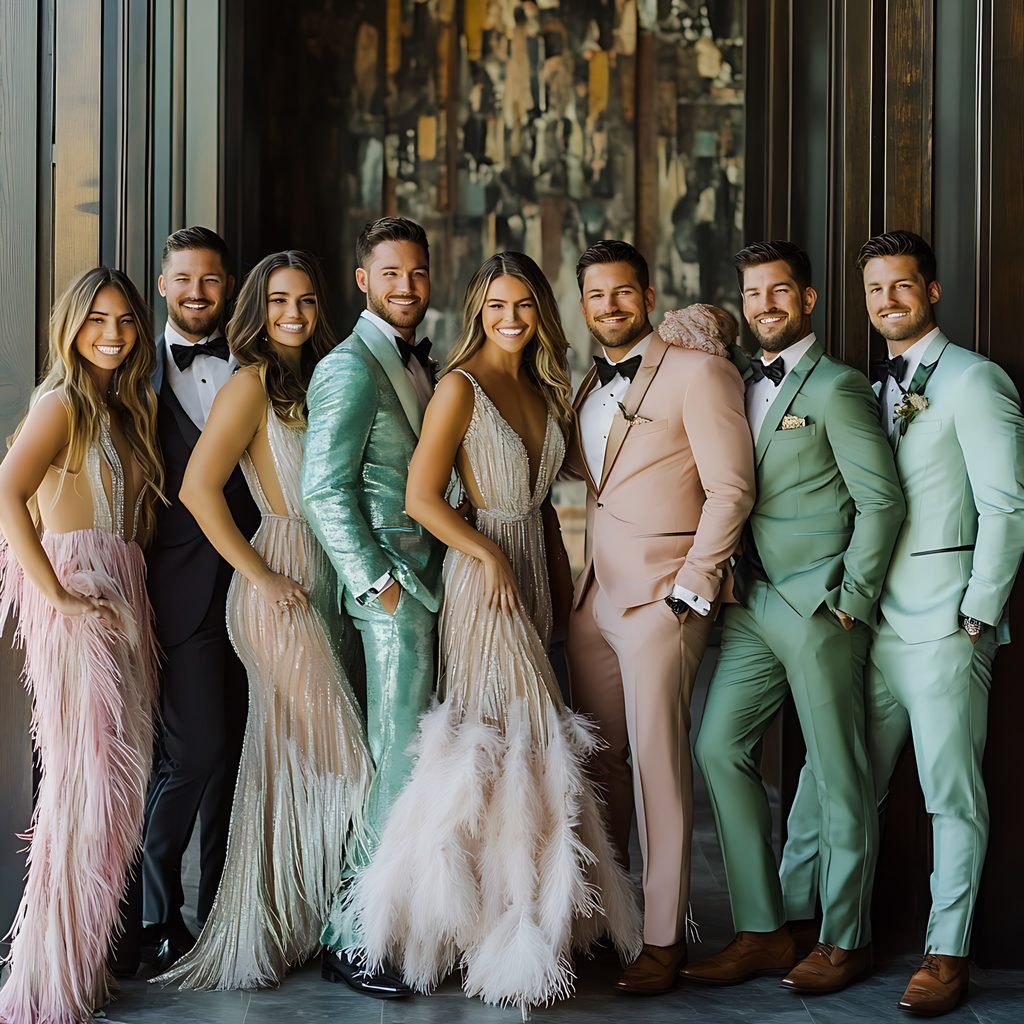
While classic tailoring remains timeless, modern weddings have introduced greater flexibility in how grooms dress. Today’s wedding suits are less about following rigid traditions and more about finding a style that reflects your personality while complementing the occasion.
Whether you prefer clean minimalism, bold colours, or softer tailoring, modern wedding suits allow you to move beyond conventional choices without compromising on elegance.
Colourful Wedding Suits
Black, navy, and grey will always have their place, but more grooms are exploring colours that add individuality to their wedding look.
Some of the most popular choices include:
- Forest green
- Burgundy
- Chocolate brown
- Beige
- Sand
- Sage green
- Midnight blue
- Ivory
The right colour should complement the venue and season rather than simply follow current trends.
For example, beige and sand work beautifully for beach weddings, while forest green and burgundy are excellent choices for autumn and evening celebrations.
At House of Tailors in Dubai, colour consultations allow clients to compare fabrics under natural light, making it easier to choose a shade that photographs well and suits the wedding setting.
Slim Fit or Classic Fit?
Fit has become one of the defining characteristics of modern tailoring.
A slim-fit suit creates a cleaner silhouette with closer-fitting trousers and a shaped jacket. It remains a popular choice for contemporary weddings, particularly among younger grooms.
A classic fit offers slightly more room through the chest and trousers while maintaining a smart appearance. It provides greater comfort during long celebrations and suits a wider range of body types.
Rather than choosing the latest trend, the best fit depends on your build, comfort, and personal style.
A well-tailored classic fit will always look better than a slim-fit suit that feels restrictive.
Casual Wedding Suits
Not every wedding calls for formal tailoring.
Destination weddings, beach ceremonies, vineyards, and outdoor celebrations often favour a more relaxed approach.
Casual wedding suits commonly feature:
- lighter construction
- unstructured jackets
- linen or cotton fabrics
- softer colours
- open-collar shirts instead of ties
The overall look remains polished but feels more relaxed and appropriate for informal settings.
Comfort becomes particularly important when weddings take place outdoors during the summer months.
Tailored vs Bespoke Wedding Suits
One of the biggest decisions a groom will make is whether to choose made-to-measure tailoring or go fully bespoke.
Both offer advantages, but they provide different levels of customisation.
Made-to-Measure
Made-to-measure tailoring starts with an existing pattern that is adjusted to your measurements.
It offers:
- improved fit
- fabric choice
- design customisation
- faster production
This option works well for many grooms looking for a personalised suit within a shorter timeframe.
Bespoke
A bespoke suit is created entirely around the individual.
Every aspect of the garment—from the pattern to the final stitch—is developed specifically for the client.
The process typically includes:
- consultation
- fabric selection
- individual paper pattern
- multiple fittings
- final refinements
At House of Tailors in Dubai, bespoke wedding suits allow clients to personalise every detail, including lapels, lining, buttons, pockets, monograms, stitching, and construction methods.
For many grooms, it becomes one of the most personal garments they will ever own.
Seasonal Wedding Suit Styles
The season should always influence your wedding suit.
Choosing fabrics and colours that suit the weather helps you remain comfortable while ensuring the outfit feels appropriate for the setting.
Summer Weddings
For weddings during the warmer months, lightweight fabrics become essential.
Popular choices include:
- Tropical wool
- Lightweight wool
- Linen blends
- Wool-linen blends
Colour palettes often include:
- Light grey
- Beige
- Sand
- Soft blue
- Ivory
- Navy
These combinations work particularly well for destination weddings, outdoor ceremonies, and daytime receptions.
Autumn & Winter Weddings
Cooler seasons allow for richer fabrics and deeper colours.
Many grooms choose:
- heavier wool
- textured fabrics
- velvet tuxedos
- flannel blends
Popular colours include:
- Burgundy
- Forest green
- Chocolate brown
- Charcoal
- Midnight blue
These fabrics create warmth while adding texture and depth to the overall look.
Wedding Accessories
Accessories complete the outfit and allow the groom to introduce subtle personal details without overwhelming the suit.
The objective is coordination rather than excess.
Shirt
A crisp white shirt remains the safest and most versatile option for almost every wedding.
Spread collars work with both ties and bow ties, while wing collars are traditionally reserved for tuxedos.
Tie or Bow Tie
A tuxedo is traditionally paired with a bow tie.
For tailored suits, both neckties and bow ties work depending on the dress code and personal preference.
Silk remains the most popular choice because of its clean finish and elegant drape.
Pocket Square
A pocket square adds colour and texture.
Rather than matching it exactly to the tie, choose colours that complement the overall outfit.
Cufflinks
Cufflinks are a timeless finishing detail.
Many grooms choose classic silver or gold designs, while others opt for personalised cufflinks that hold sentimental value.
Belt or Side Adjusters
Many bespoke wedding trousers are designed with side adjusters rather than belt loops.
This creates a cleaner silhouette and eliminates the need for a belt.
Boutonnière
A boutonnière ties the groom’s outfit into the overall wedding styling.
Usually coordinated with the bride’s bouquet, it remains one of the simplest ways to complete a wedding look.
Final Recommendations
Choosing the right wedding suit is about more than selecting a colour or following current trends.
The venue, season, dress code, fabric, fit, and construction all work together to create the final result.
Taking the time to understand the different styles available allows you to make decisions that feel appropriate for both the occasion and your personality.
Whether you prefer the timeless elegance of a tuxedo, the versatility of a three-piece suit, or the relaxed sophistication of modern tailoring, the goal remains the same—a suit that fits beautifully, feels comfortable, and helps you enjoy every moment of your wedding day.
At House of Tailors in Dubai, every wedding suit begins with a conversation. By understanding your vision, wedding theme, and personal style, our team creates garments that are tailored specificall