
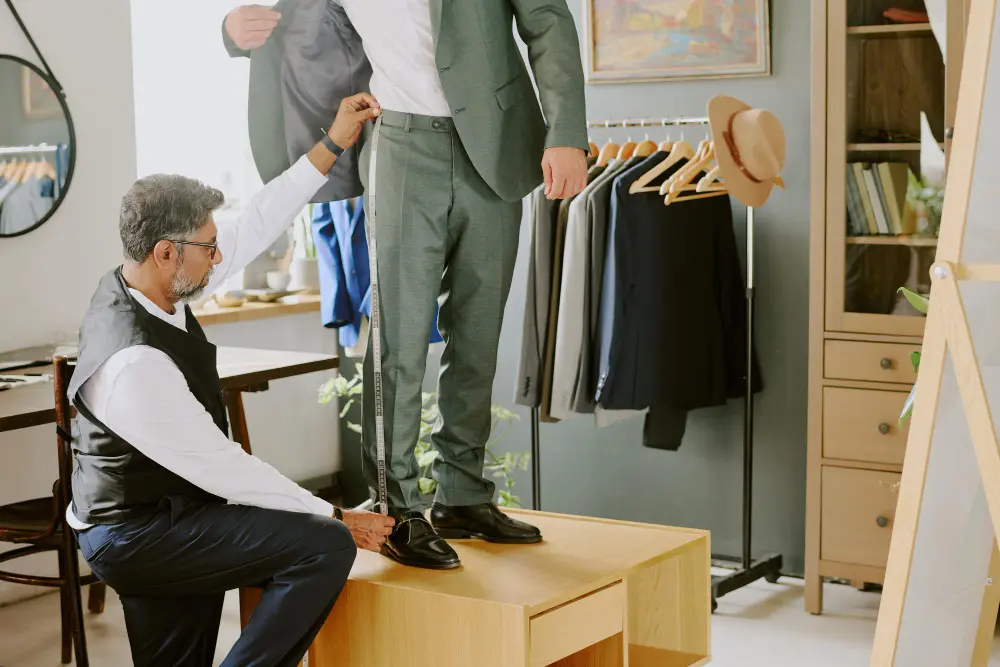
For many first-time clients, bespoke tailoring feels unfamiliar at the beginning. Unlike buying clothing directly off a rack, the process involves multiple conversations, fittings, and decisions over time.
The experience tends to work best when both the tailor and the client approach it collaboratively. A well-made garment is not created in a single appointment—it develops gradually through communication, fittings, and refinement.
Understanding how the process works usually leads to better results and a smoother overall experience.
Arrive With Context, Not Just Inspiration
Many clients come into a consultation with saved references:
- Pinterest boards
- Instagram screenshots
- celebrity looks
- runway images
These can be useful, but context matters more than replication.
A suit that works on:
- a model
- a red carpet
- or a heavily edited campaign
may not translate the same way into daily wear, business settings, or the UAE climate.
At House of Tailors in Dubai, consultations usually work best when clients explain:
- where the garment will be worn
- how often it will be used
- what they want it to feel like
- and how they normally dress
This gives the tailor something more practical to build from.
Understand That Bespoke Takes Time
One of the biggest adjustments for first-time clients is understanding that bespoke tailoring is a process rather than an instant purchase.
Depending on the garment, the process may include:
- consultations
- fabric selection
- pattern drafting
- multiple fittings
- structural refinements
The timeline is longer because the garment is being developed progressively.
Clients who approach bespoke with realistic expectations about timing usually enjoy the process far more than those expecting immediate results.
Be Honest About Comfort
A common mistake during fittings is agreeing to a fit that looks good visually but feels uncomfortable in movement.
Clients should communicate openly about:
- shoulder pressure
- trouser comfort
- sleeve movement
- jacket tension while seated
- overall ease of wear
A fitting is not a test. Adjustments are expected.
At House of Tailors in Dubai, fittings are specifically designed to identify these issues before the garment is finalised.
The earlier feedback is given, the easier it becomes to refine the suit correctly.
Small Details Matter More Than Most Clients Expect
In bespoke tailoring, relatively small choices can influence the overall result significantly:
- trouser rise
- lapel width
- jacket length
- pocket style
- fabric texture
- button placement
Clients do not need to become tailoring experts, but understanding that these decisions affect proportion helps create better outcomes.
Often, the most successful garments are the ones where the overall proportions feel coherent rather than overloaded with design details.
Consistency Helps the Tailor
One overlooked part of bespoke tailoring is continuity.
If clients:
- fluctuate significantly in weight
- rush measurements after travel
- change direction repeatedly during fittings
it becomes harder to maintain consistency throughout the garment.
This is especially important for wedding suits or formalwear with fixed deadlines.
A stable reference point usually produces the strongest final result.
Communication Is Part of the Process
Bespoke tailoring works best when communication remains direct and clear.
For example:
- explain practical concerns instead of vague dislikes
- mention where discomfort occurs specifically
- clarify how formal or versatile the garment needs to be
Saying:
- “the jacket feels tight when I drive”
is more useful than: - “something feels off”
Precise feedback allows precise corrections.
Respect the Difference Between Tailoring and Trend Cycles
Fashion trends move quickly. Bespoke garments usually remain in wardrobes much longer.
Clients sometimes arrive wanting:
- highly aggressive cuts
- extremely short jackets
- trend-heavy silhouettes
These may look current temporarily but often age quickly.
Experienced tailors usually guide clients toward proportions that:
- remain wearable long term
- work across different settings
- feel balanced over time
That guidance is part of the value of bespoke tailoring itself.
The Relationship Usually Extends Beyond One Garment
One of the biggest differences between bespoke tailoring and standard retail is continuity.
Over time:
- patterns improve
- fit consistency becomes easier
- fabric preferences become clearer
- wardrobes become more cohesive
Many returning clients at House of Tailors in Dubai eventually stop approaching tailoring as isolated purchases and begin treating it as long-term wardrobe development.
That is usually when the experience becomes most effective.
Final Thought
The best bespoke tailoring experiences are rarely built on complexity or formality. They work because both sides understand the process clearly.
Clients bring:
- honesty
- clarity
- patience
- practical feedback
The tailor brings:
- technical knowledge
- structure
- fit correction
- garment development
When those two sides work well together, the final garment tends to feel far more natural—not only visually, but in how it functions over time.
FAQs
1. How many fittings are typically involved when working with House of Tailors in Dubai?
The number of fittings depends on the garment and level of customisation, but bespoke tailoring typically involves multiple fitting stages to assess balance, comfort, and overall fit before final delivery. This ensures the finished garment is shaped around the client rather than adjusted at the last minute.
2. What should I bring to my bespoke tailoring consultation at House of Tailors?
Clients are welcome to bring inspiration images, but it is equally helpful to share details about where the garment will be worn, how often it will be used, and any fit challenges experienced with previous clothing. This helps the House of Tailors team recommend suitable fabrics, styling details, and construction options.
3. Does House of Tailors offer home and office consultations for bespoke tailoring?
Yes. House of Tailors in Dubai provides home and office tailoring services, allowing clients to complete consultations, measurements, fabric selection, and fittings in a more convenient setting while maintaining the same bespoke tailoring process.
4. How long does the bespoke tailoring process take at House of Tailors?
The timeline varies depending on the garment, fabric selection, and fitting requirements. Because each bespoke suit is developed through consultation, pattern creation, and multiple fitting stages, clients are encouraged to begin the process well in advance of weddings, business events, or important occasions.
5. Can House of Tailors create future garments using my existing measurements and pattern?
Yes. Once a bespoke pattern has been developed, returning clients can continue building their wardrobe with greater consistency. This allows House of Tailors to refine fit preferences over time and create additional suits, jackets, trousers, or formalwear more efficiently while maintaining continuity across garments.