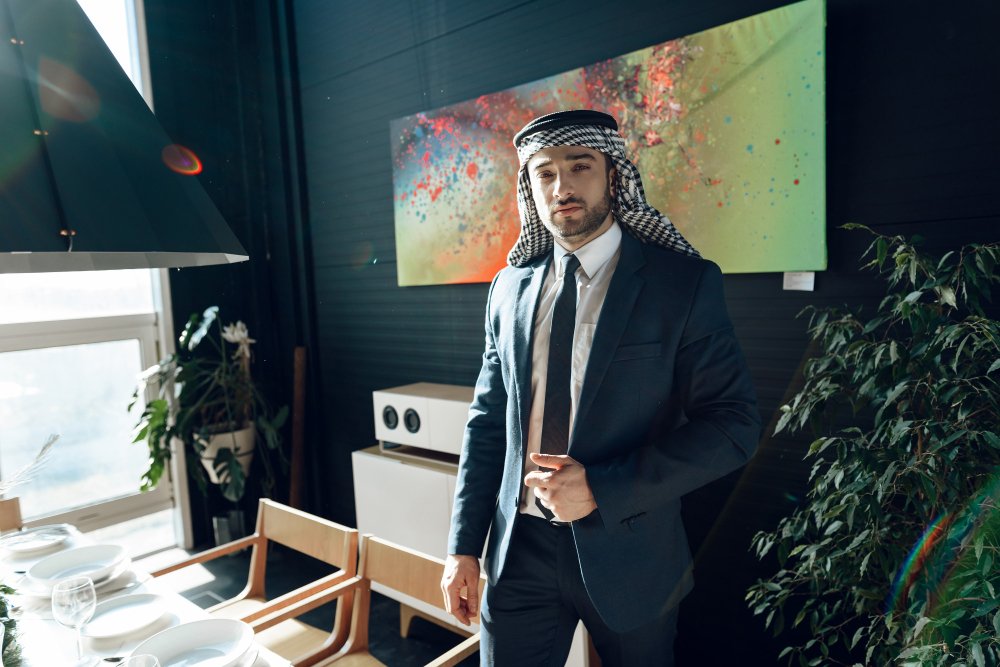
Business dress codes in Saudi Arabia have changed noticeably over the past few years. Not because formality has disappeared, but because the environments professionals operate in have become more varied.
A decade ago, dressing for business was relatively straightforward. The expectation was formal, conservative, and consistent across most industries. That is no longer the case.
As Vision 2030 continues to reshape industries across the Kingdom, it is also changing how professionals present themselves — particularly in sectors connected to finance, consulting, hospitality, technology, entrepreneurship, and international business.
The shift is less about dressing casually and more about dressing appropriately for different contexts.
The Workplace Is No Longer Uniform

Saudi Arabia’s professional landscape has become more layered.
A boardroom meeting in Riyadh, a startup workspace in NEOM, and a hospitality investment summit in Jeddah now operate with very different expectations around appearance.
This has created a broader approach to business dressing:
- Traditional formalwear still exists in corporate environments
- Softer tailoring has become more common in creative and entrepreneurial spaces
- Smart casual dressing is increasingly accepted in certain industries
Professionals are adapting their wardrobes based on where they work, who they meet, and how their industries operate.
Structure Still Matters
Despite these changes, presentation remains important.
Well-fitted clothing continues to signal:
- Professional awareness
- Attention to detail
- Reliability in formal settings
The difference is that dressing well no longer automatically means dressing heavily or rigidly.
Many professionals are now choosing:
- Lightweight tailoring
- Softer jacket construction
- More breathable fabrics
- Less restrictive silhouettes
This is particularly relevant for those investing in tailored suits in Saudi Arabia, where garments need to function across long working days and changing environments.
Climate Is Influencing Professional Dressing
The Saudi climate has always affected how people dress, but it is now influencing tailoring decisions more directly.
Professionals moving between:
- Outdoor heat
- Air-conditioned offices
- Conferences
- Evening networking events
need clothing that performs consistently throughout the day.
This is one reason lightweight wool suits and tropical wool suits have become more common in professional wardrobes. These fabrics maintain structure while remaining more comfortable during extended wear.
The shift toward breathable suit fabrics is practical rather than trend-driven.
Colour Choices Are Expanding
Dark navy and charcoal remain standard in formal business settings, particularly in Riyadh.
At the same time, professionals are becoming more open to:
- Mid-grey tailoring
- Earth tones
- Softer blues
- Textured fabrics
This is especially visible in industries connected to design, hospitality, media, and entrepreneurship.
The overall approach has become more flexible, although strong colour choices and excessive styling are still relatively uncommon in business environments.
International Business Has Influenced Expectations
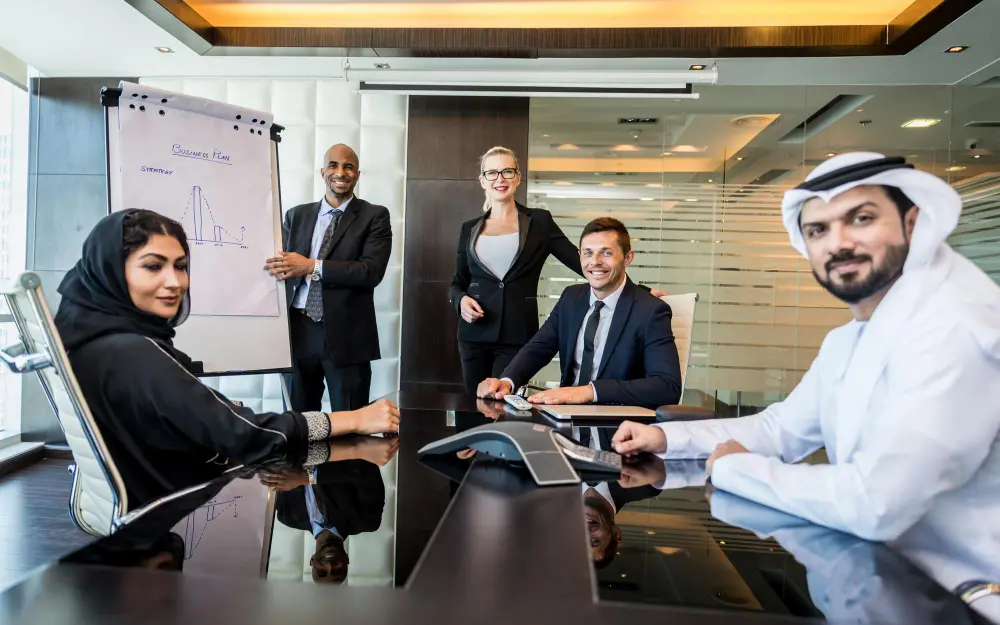
As Saudi Arabia continues to attract international companies, conferences, and investment activity, professional appearance has naturally become more global.
Executives are increasingly dressing for:
- Cross-border meetings
- International presentations
- Networking events
- Public-facing leadership roles
This has increased demand for bespoke tailoring in Saudi Arabia, particularly among professionals looking for garments that feel appropriate in both local and international business settings.
The Rise of Wardrobe Planning
Another noticeable shift is how professionals approach their wardrobes.
Rather than buying occasional suits for isolated events, many are building more structured rotations:
- Business suits for daily professional use
- Jackets for smart casual settings
- Formalwear for evening events and weddings
This approach reduces inconsistency and makes dressing more efficient across different parts of the week.
Convenience Is Becoming Part of the Experience
Business culture has also changed how tailoring services are delivered.
Professionals increasingly value:
- Home consultations
- Office fittings
- Flexible appointments
- Faster communication during the tailoring process
For many clients, efficiency matters just as much as the final garment itself.
This is one reason home tailoring services have become more common across Saudi Arabia, particularly among executives and business owners with demanding schedules.
The Shift Is Less About Fashion — More About Awareness
The evolution of business dressing in Saudi Arabia is not about becoming more fashion-oriented.
It is about understanding:
- Environment
- Industry
- Function
- Context
A well-dressed professional is no longer defined only by formality. The expectation now is appropriateness — knowing what works for the setting and wearing it well.
Final Thought
Vision 2030 is reshaping industries, workplaces, and professional culture across Saudi Arabia. Appearance is changing alongside it.
Business wardrobes are becoming more adaptable, fabrics more climate-conscious, and tailoring more practical for modern working environments.
Professionals are still dressing with structure and presence — but the approach is becoming more flexible, more informed, and more aligned with how people actually work across the Kingdom.
This is why many professionals are turning to tailoring houses such as House of Tailors, where the focus is on building wardrobes suited to the realities of business life in Saudi Arabia.